
Heated vs Unheated Sapphire
Most sapphires on the market have been heated to improve their colour. An unheated sapphire has never been treated, which makes it rarer and dearer. Both are natural stones, and a good report will always tell you which you are holding.
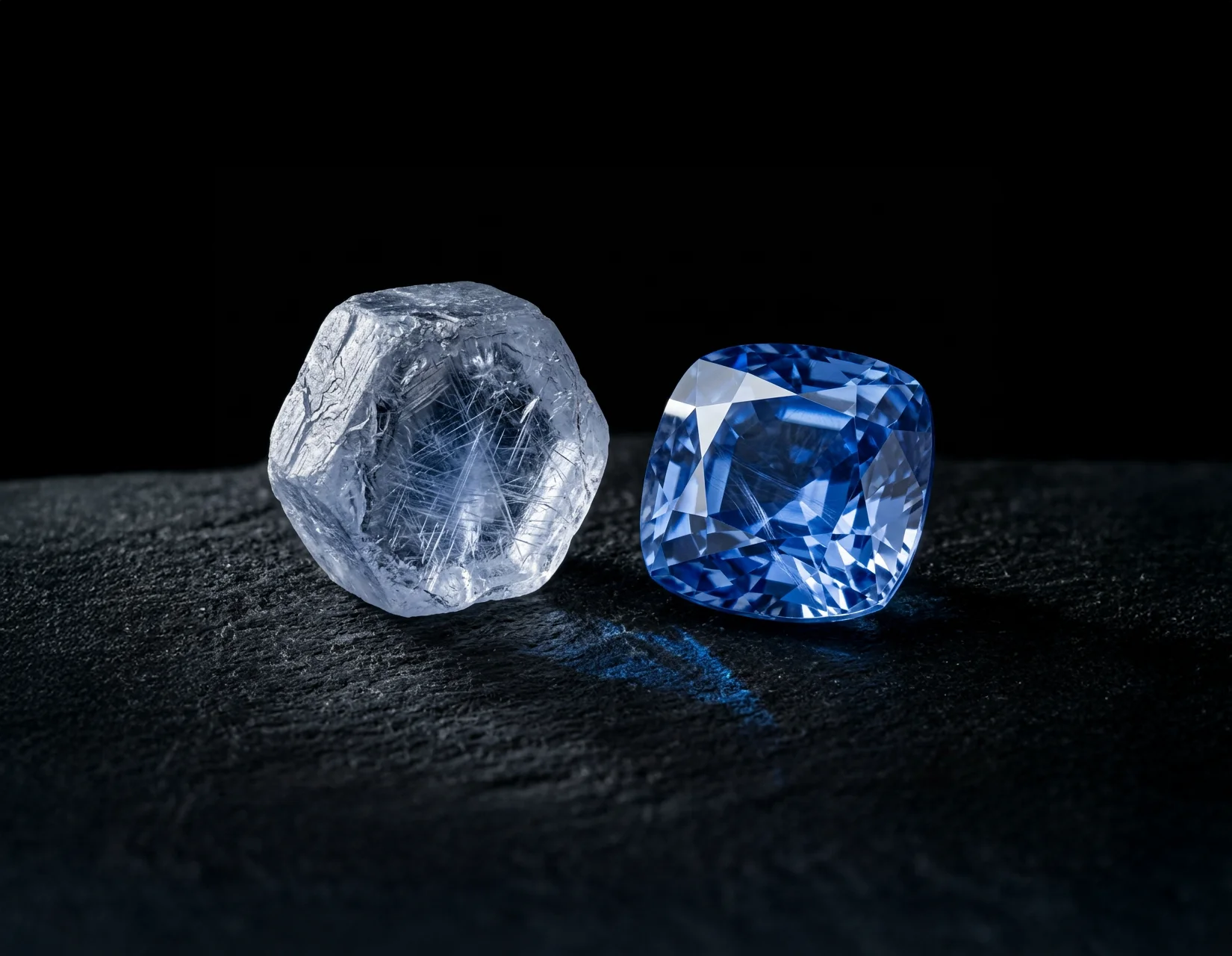
What Is the Difference Between a Heated and Unheated Sapphire?
A heated sapphire has been treated with high temperature to improve its colour or clarity. An unheated sapphire has had no such treatment, so its colour is entirely natural.
Both are genuine, natural sapphires dug from the ground. The difference is what happened after mining. Heating is a thermal treatment, carried out in a furnace, that can deepen a pale blue, clear a milky stone or lift a weak colour. It does not add anything to the stone; it works on what is already there. An unheated stone reaches you exactly as the earth made it.
Neither is fake, and neither is wrong. Heat is a long established, disclosed treatment, not a trick. The distinction matters because it affects rarity and price, and because some buyers place real value on a stone whose colour owes nothing to a furnace.
Heated vs Unheated, Side by Side
- The large majority of sapphires on the market
- Colour and clarity improved with high heat
- More affordable for the same look
- Permanent and stable; it will not fade or revert
- Disclosed on the report as heated
- Natural colour, never thermally treated
- Far rarer, a small minority of stones
- Commands a premium, often a large one
- The report reads no indications of heating
- The collector's choice for the finest natural colour
What Does Heating Do to a Sapphire?
Controlled heat works on the colour and clarity already in the rough. It dissolves the fine silk, clears the haze and strengthens the blue, and the change is permanent.
Why Are Most Sapphires Heated?
Sapphires are heated to improve colour and clarity, and to make more of the world's rough usable as fine gems.
Much rough sapphire comes out of the ground pale, greyish or clouded with fine rutile silk. Controlled heating, often somewhere between roughly 1,000 and 1,800 degrees Celsius, can dissolve that silk, clear the haze and strengthen the blue. The result is a brighter, cleaner, more saleable stone. Treat those temperatures as indicative rather than exact, as they vary with the material and the method.
Without heat, a large share of mined sapphire would be too pale or too included to sell as a fine gem, so heating is one reason good colour is affordable at all. The treatment is permanent and stable: a heated sapphire will not fade or revert, and it can be worn and cleaned like any other stone.
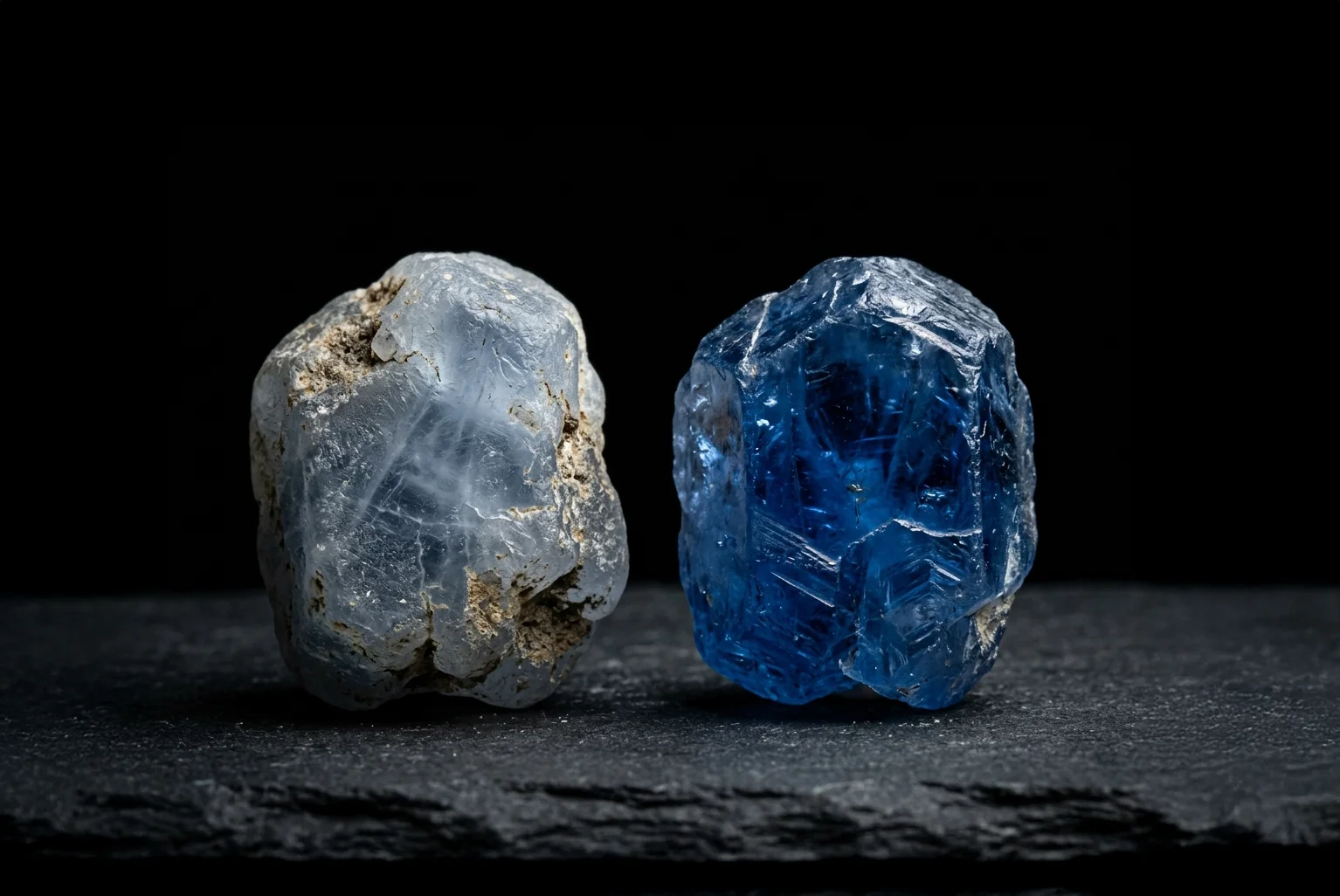
Is Unheated Always Better?
No. Unheated is rarer, but it is only better when the natural colour and clarity are genuinely fine.
The word unheated sells, and it deserves its premium when the stone is beautiful on its own merits. But an unheated sapphire of grey, weak or overly dark colour is still a weak stone, and a skilfully heated sapphire of vivid colour can be the more beautiful gem by far. Do not pay an unheated premium for poor colour.
Choose unheated when you want the rarest category, when the colour quality is already high, or when you are buying to collect or to hold value. Choose a fine heated stone when you want the best possible look for your budget. The right answer depends on what you value, not on the label alone. If colour is your priority, start with the four Cs.
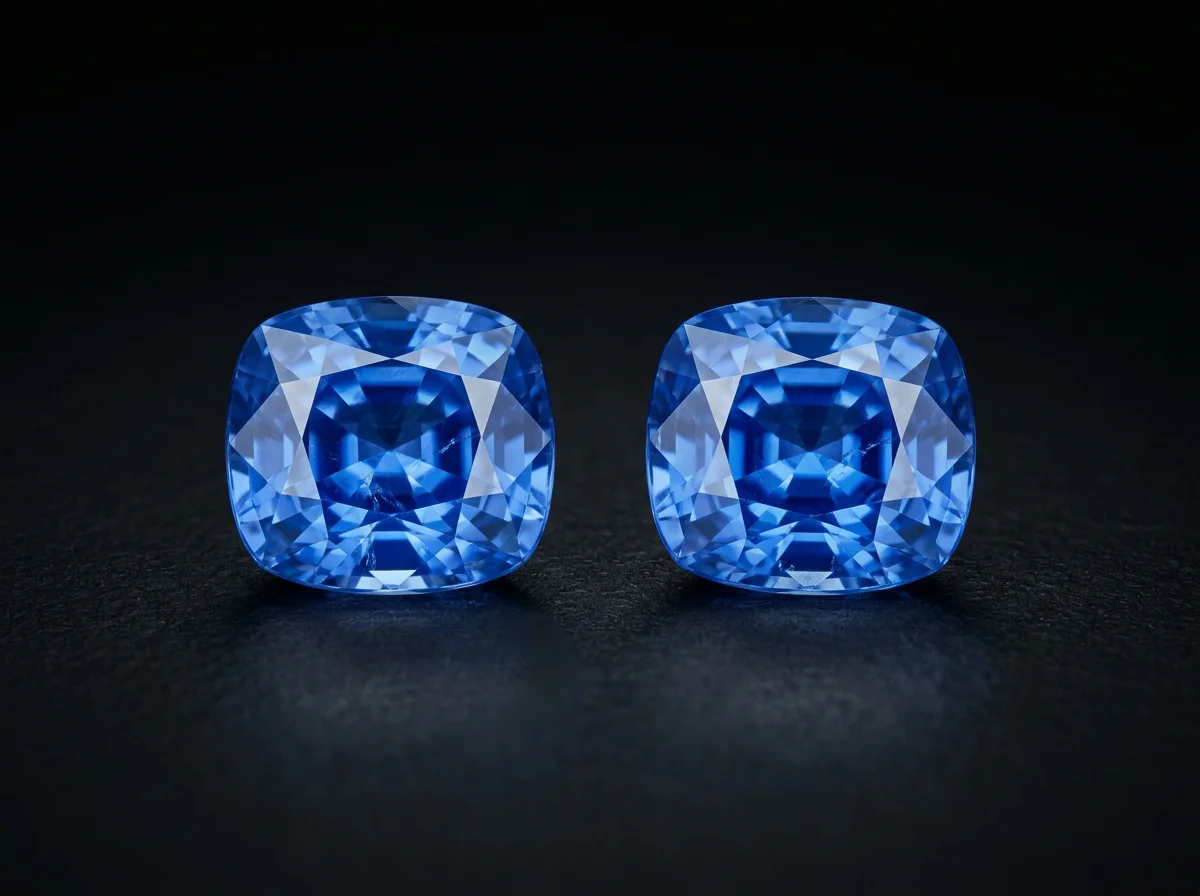
How Rare Is an Unheated Ceylon Sapphire?
Unheated stones are a small minority of the market, and fine, unheated Ceylon sapphires of strong colour are rarer still.
Industry estimates vary, but it is widely held that more than nine in ten sapphires offered for sale have been heated. Among the unheated remainder, only a fraction have the colour and clarity that make a stone genuinely desirable. So an unheated Ceylon sapphire with fine colour sits in a small and sought-after group, which is what supports its premium. Treat the proportion as a general guide rather than a precise figure.
Ceylon, or Sri Lanka, is one of the most important sources of fine unheated material, prized for bright, clear stones that often look their best with no treatment at all. That reputation is part of why a documented unheated Ceylon stone carries weight with collectors.
How Is Heat Treatment Detected and Disclosed?
Heat is detected by an independent laboratory, which studies the stone's inclusions under magnification. The finding is written on the report's treatment line.
Heating leaves traces. Under the microscope, a gemmologist studies the rutile silk and the tiny mineral crystals inside the stone: heat melts or alters silk and can leave tension halos around crystals, while an unheated stone shows these features intact. Confirming no heat takes real expertise, which is why laboratories such as SSEF, GRS, Gübelin and GIA are trusted for it.
The report states the result plainly, usually as a treatment line that reads along the lines of no indications of heating, or heated. A seller's word is not enough for a stone of any value; the laboratory report is. Read the treatment line before you read the price, and make sure the report is from a laboratory you can verify with directly. Our guide to reading a certificate walks through it.
We Tell You, Every Time
Heated or unheated, the treatment is stated on every stone we offer, and confirmed by an independent report. We never blur it to lift a price.
Common Questions
Yes. A heated sapphire is a genuine, natural sapphire. Heat improves the colour or clarity of a natural stone; it does not make the stone artificial. Only laboratory grown, synthetic sapphires are not natural, and that is a separate matter from heating.
For the same look, an unheated stone is worth more because it is rarer, so heating does lower value against an identical unheated stone. But a fine heated sapphire can still be valuable and beautiful, and it offers far better colour for the money than most buyers could otherwise afford.
You cannot tell reliably by eye. Confirming heat or no heat needs a gemmological laboratory to study the inclusions under magnification. If a stone is sold as unheated, insist on a report from a respected laboratory such as SSEF, GRS, Gübelin or GIA that states it.
It is if the stone's natural colour is genuinely fine and rarity matters to you, for example for collecting or long-term value. It is not worth a premium if the colour is weak, where a better heated stone would serve you more. Judge the stone first, the label second.
No. Heat treatment is permanent and stable. A heated sapphire will not fade or revert to its original colour, and it can be worn and cleaned like any untreated stone.
Learn More
Heated or Unheated, We Will Find It
Tell us which you are after, and the colour and budget you have in mind, and we will send certified stones that match.