
How to Spot a Fake Ceylon Sapphire
The single most reliable way to avoid a fake Ceylon sapphire is to buy a stone with an independent laboratory report and verify it at source. By eye you can catch the obvious fakes, but glass imitations, lab-grown synthetics and quietly relabelled stones are designed to fool the eye. The report is what proves what you are holding.
How Can You Tell If a Ceylon Sapphire Is Real?
You confirm a Ceylon sapphire is real with an independent laboratory report, then verify that report at source. Visual checks help, but only a laboratory is conclusive.
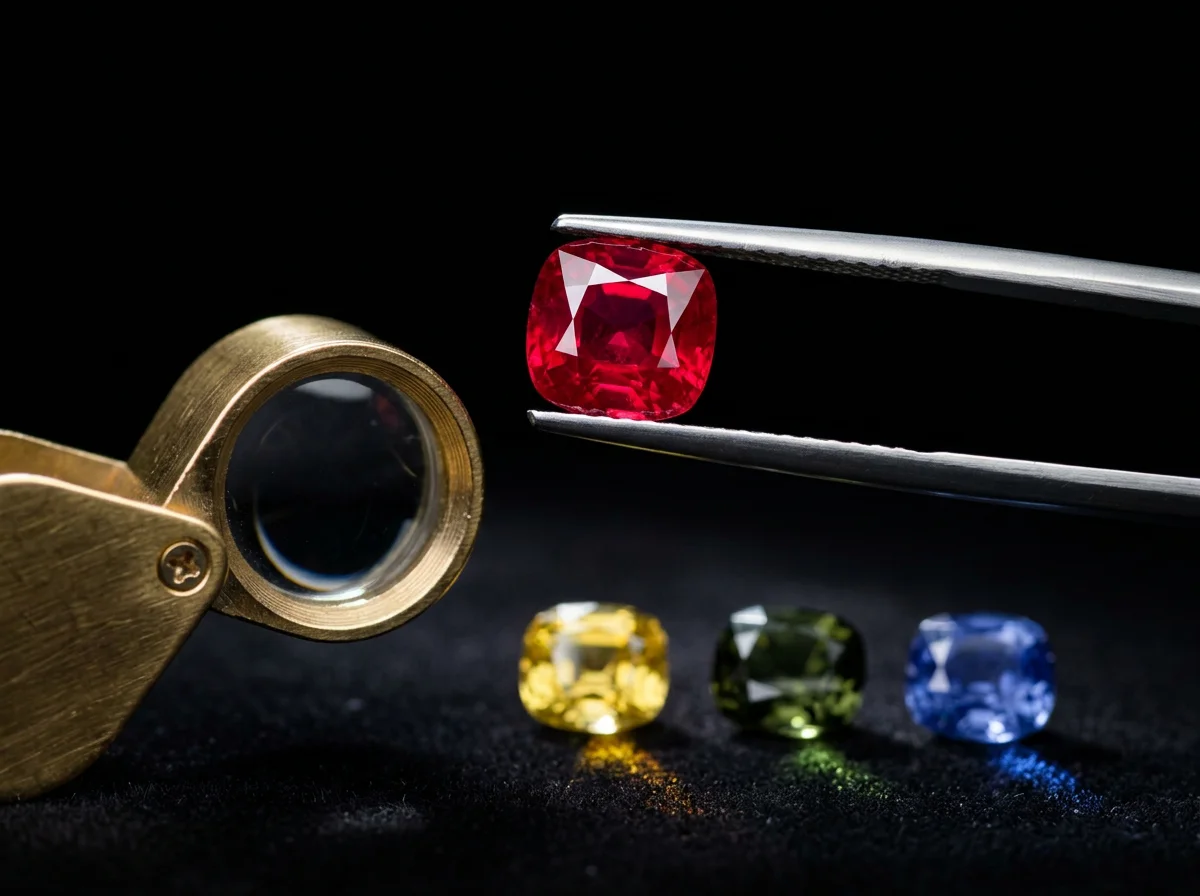
There is a quick answer and an honest one. The quick answer is that a genuine sapphire is very hard, scratch-resistant and cool to the touch, and under a loupe it usually shows fine natural inclusions rather than the rounded gas bubbles of glass. Those signs will catch a crude fake. The honest answer is that the better imitations and synthetics are made to pass exactly those checks, so they are not enough on their own for a stone of any value.
This is why the trade runs on reports. An independent laboratory can confirm the species, give an origin opinion and state any treatment, all things you cannot see reliably by eye. Buy the report as much as the stone: read it first, verify it on the laboratory's own site, and let it, not a seller's description, tell you what you are holding. Our guide to reading a certificate walks through the lines that matter.
Five Checks Before You Buy
Run these five checks in order. Each sets what a natural Ceylon sapphire shows against what a fake, glass or synthetic gives away. None is proof on its own, but together they tell you which stones deserve a closer look.
Natural Signs Versus Warning Signs
What you can look for by eye and under a loupe. None of it replaces a report, but together the signs tell you which stones deserve a closer look and which to walk away from.
- Hard and cool to the touch, resists scratching
- Fine natural inclusions under a loupe: silk, crystals, colour zoning
- Straight or angular colour banding, not curved
- Backed by an independent report you can verify at source
- Rounded gas bubbles and swirl marks under magnification
- Perfectly flawless yet offered at a low price
- Warm to the touch, and feels light for its size
- No report, or only an in-house certificate you cannot check
Glass, Synthetic and Composite, What to Watch For
The three things sold as sapphire that are not a natural sapphire are glass imitations, lab-grown synthetic corundum, and glass-filled composite stones.
Glass is the cheapest imitation. It is softer, warmer to the touch, and under magnification it often shows rounded gas bubbles and swirl marks that never appear in natural corundum. A stone that looks perfectly flawless to the naked eye and feels light or warm should raise immediate suspicion.
Synthetic sapphire is trickier, because it is genuine corundum grown in a laboratory, with the same hardness and chemistry as the natural stone. It is not a fake mineral, but it is not a natural sapphire, and it is worth a fraction of one. Flux-grown and flame-fusion synthetics can look convincing, and only a laboratory reliably tells them apart by their growth features. Composite or glass-filled stones, where lead glass fills cracks in poor natural material, are a third trap: they are sold as natural but are heavily treated and fragile.
What Tests Does a Lab Run?
A laboratory identifies a sapphire with non-destructive instruments: magnification, refractive index, spectroscopy and trace-element analysis.
A gemmologist begins with magnification to study the inclusions, then measures the refractive index and specific gravity, which separate corundum from look-alikes and glass. Spectroscopy reads how the stone absorbs light, which helps distinguish natural from synthetic and detect some treatments. For origin and for confirming no heat, the leading laboratories use advanced trace-element analysis that is well beyond any home or shop test.
All of this is non-destructive, so the stone is unharmed. The result is a report that states the species, the weight and measurements, an origin opinion where offered, and any treatment. That combination is what no imitation can fake, which is why a verifiable report from a laboratory such as GIA, SSEF, Gübelin or GRS is the real protection against a fake.
No Report, No Deal
For any sapphire of real value, buy only with an independent report you can verify at source. If a seller cannot or will not provide one, treat the stone as unproven, whatever the photographs show.
How Do You Buy Safely From Abroad?
Buy from a seller who provides a verifiable independent report, clear photographs and an honest treatment disclosure, and who welcomes you checking the stone.
Distance removes your ability to handle the stone, so the report and the seller's conduct do the work. Insist on an independent report you can verify on the laboratory's own website using its report number, not a photocopy or a seller's in-house certificate. Ask for sharp, well-lit photographs and, ideally, video, and make sure the treatment and origin are stated plainly. A price that is far below the market for a fine unheated Ceylon stone is the clearest warning of all.
Beyond the paperwork, judge the seller. A reputable house explains the stone, discloses treatment without being pushed, offers a clear returns policy, and is happy for you to have the stone checked independently on arrival. Reluctance on any of these points is the signal to walk away. When you know what the four Cs should look like, a too-good story is much easier to spot.
- Species
- Corundum
- Hardness
- 9 on the Mohs scale
- Cheapest fake
- Glass imitation
- Hardest to spot
- Synthetic corundum
- Most reliable proof
- Independent laboratory report
- Main labs
- GIA, SSEF, Gübelin, GRS
Common Questions
Only roughly. A real sapphire conducts heat well, so fog from your breath clears quickly, while glass stays misty a little longer. It is a weak hint, not proof, and it will not separate a natural sapphire from a synthetic one. Use it as a first glance, never as a decision.
Often, yes, if it is cheap. Natural sapphires almost always carry tiny inclusions, so a perfectly clean stone at a low price is more likely glass or synthetic. A genuinely flawless natural sapphire is rare and expensive, and it would come with a report confirming it.
They are real corundum, with the same hardness and chemistry as a natural sapphire, so they are not a fake mineral. But they are not natural, and they are worth a small fraction of a natural stone. Sold honestly they are fine; sold as natural they are a deception a laboratory will catch.
Not an outright fake, but a relabel: a heated, glass-filled or non-Ceylon stone sold as a fine unheated Ceylon sapphire to command a higher price. The defence is the same, an independent report that states the species, origin opinion and treatment, verified at source.
Use the report number on the laboratory's own website to confirm the report exists and matches the stone, and check the weight, measurements and any photograph against the stone in hand. Be wary of photocopies, in-house certificates and reports from laboratories you cannot find or contact.
Learn More
Buy a Stone You Can Verify
Every sapphire we offer comes with an independent report and an honest disclosure. Tell us what you are looking for and we will send stones you can check yourself.