
The Sapphire 4Cs: Colour, Clarity, Cut and Carat
A sapphire is judged on four things: colour, clarity, cut and carat. Colour decides most of the price, and a clean, well cut stone of strong colour will always outrank a larger, duller one.
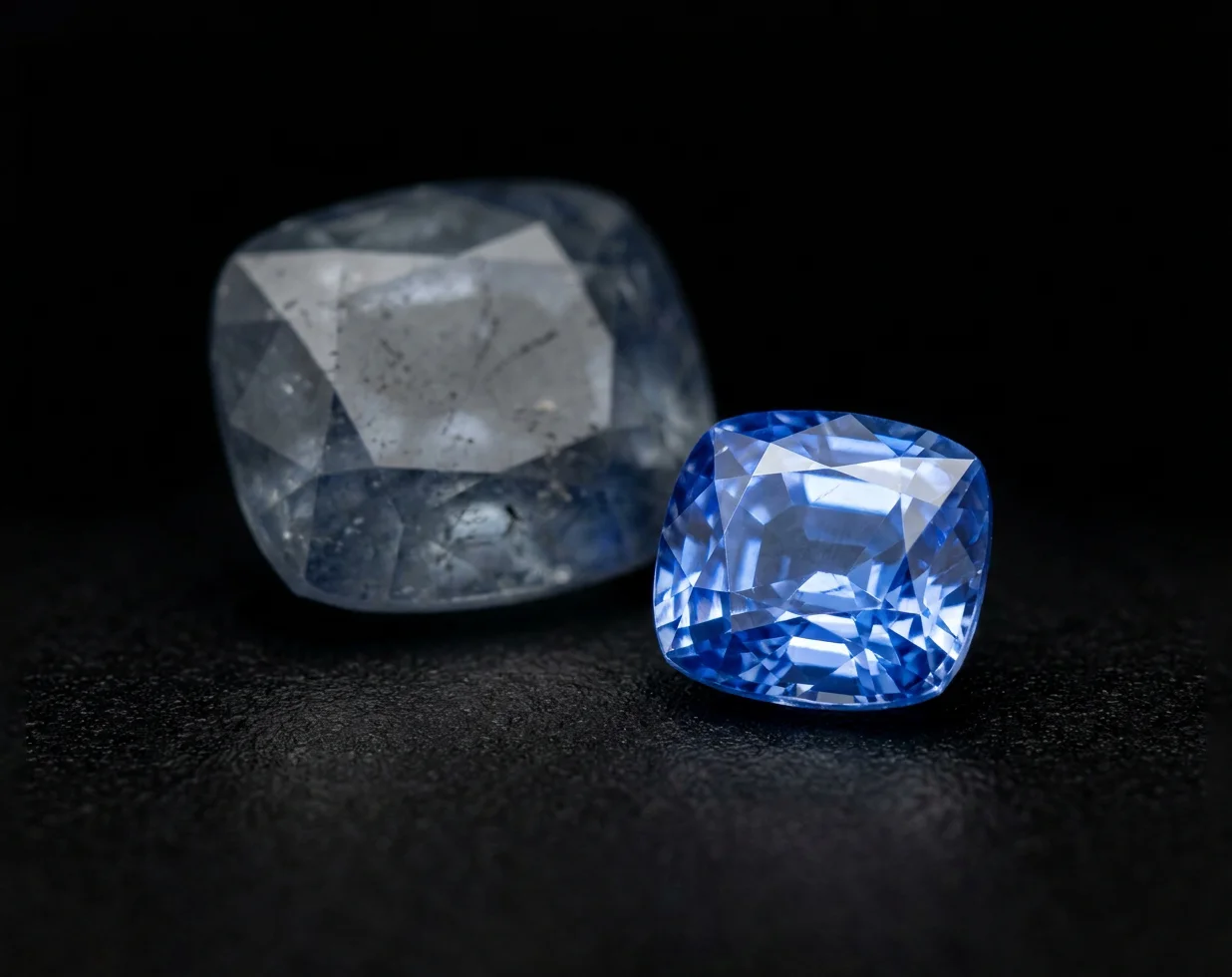
What Are the 4Cs of a Sapphire?
The 4Cs are colour, clarity, cut and carat, the four qualities used to grade any sapphire.
Sapphire is the gem variety of the mineral corundum, the same species as ruby. The four Cs are a shared language for describing a stone's quality, borrowed from the diamond trade but weighted very differently for a coloured gem. With a diamond, cut and clarity lead. With a sapphire, colour leads and everything else supports it.
Colour, Clarity, Cut and Carat
The four qualities that grade a sapphire, at a glance. Read each in turn, then weigh them together against your budget.
Which of the 4Cs Matters Most?
Colour matters most. It accounts for the largest share of a fine sapphire's value, well ahead of the other three.
If you remember one thing, remember this: with sapphire you are buying colour first. Two stones of equal weight and clarity can differ in price many times over on colour alone. A top cornflower or royal blue commands a premium that no amount of size or polish will match in a duller stone.
Clarity and cut come next, and they work together. A clean stone shows its colour without distraction, and a good cut concentrates that colour and returns light to the eye. Carat weight matters, but only once colour is settled: a large grey sapphire is still a grey sapphire. Decide the colour you want, then spend what is left on the best clarity, cut and size you can.
How Is Sapphire Colour Graded?
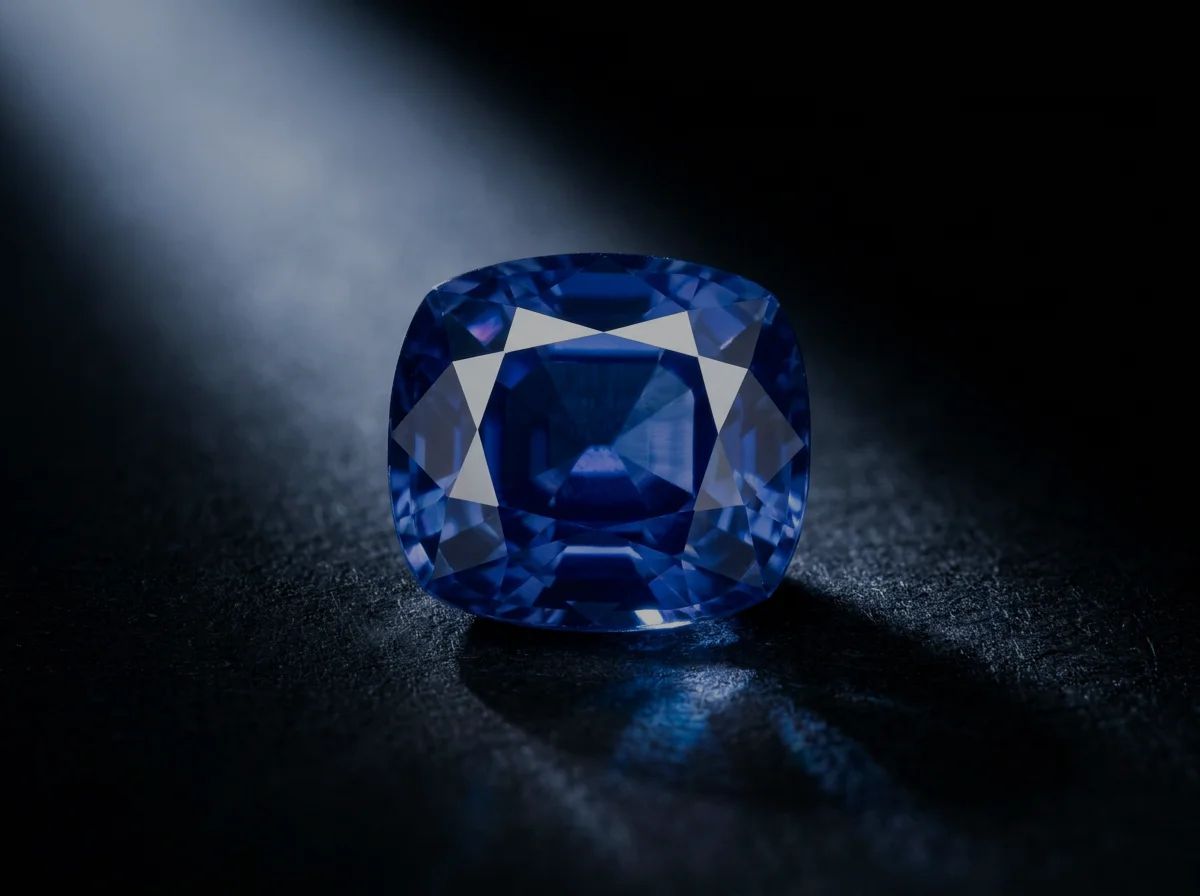
Colour is read in three parts: hue, the colour itself; tone, how light or dark it is; and saturation, how pure and strong it is.
Hue is the basic colour and any secondary tint. The most valued blue sapphires are a pure blue, or a blue with only a faint violet. A green or grey secondary tint pulls the price down. Saturation is the strength of the colour, and it is what separates a fine stone from an ordinary one: the best stones are vividly saturated, with no grey mask. Tone is the lightness or darkness, and the sweet spot is medium to medium dark. Too light looks washed out; too dark reads as inky and loses life.
The trade uses names for the prized combinations. Cornflower describes a soft, slightly velvety medium blue. Royal blue describes a deeper, more intense blue. Both are unofficial trade terms, not grades, and some laboratories such as GRS and SSEF will note them on a report. Treat them as a guide, not a guarantee, and trust your own eye in daylight.
| Colour | How it looks | Effect on value |
|---|---|---|
| Royal blue | Deep, vivid, pure blue, medium to medium dark | Highest |
| Cornflower | Vivid medium blue, slightly soft or velvety | Very high |
| Pure blue | Clean, well saturated blue, no grey | Strong |
| Violet-blue | Blue with a faint violet tint | Slight premium to neutral |
| Greyish or inky | Grey mask, or so dark it looks black | Lower |
| Pale, washed out | Light tone, weak saturation | Lowest |
What Clarity Is Normal in a Sapphire?
Most natural sapphires contain some inclusions. The practical standard for a fine stone is eye-clean: nothing visible to the naked eye.
Inclusions are natural features formed with the crystal, often fine needles of rutile known as silk. In moderation they are harmless, and they are part of how a laboratory confirms a stone is natural rather than synthetic. A flawless sapphire is rare and not necessary; eye-clean is the sensible target. Hold the stone face up at arm's length in daylight: if you see nothing, the clarity is doing its job.
Some inclusions do matter. A large fracture near the surface can threaten durability, and a dense cloud can dull the colour or give a hazy, sleepy look. A little silk, on the other hand, can soften and spread the colour attractively, and in some stones produces the star effect. Read the report's clarity comments, and ask to see a clear, well lit photograph or video before you decide.
How Does the Cut Affect a Sapphire?
Cut is the only C decided by people. A good cut returns light evenly across the whole stone; a poor one leaves a pale window where light passes straight through.
Coloured stones are cut to show colour, not just sparkle, so proportions are judged differently from a diamond. A well cut sapphire is even and lively across its face, with good symmetry and a pleasing outline. The common fault is a stone cut too shallow to save weight, which produces a window: a transparent patch in the centre where you can read print through the stone. Windowing wastes colour and light, and it should pull the price down.
Cutters often keep a stone heavier and slightly less ideal to hold carat weight, because price steps up with size. That is a fair trade only if the extra weight does not cost you a window or a lifeless face. Tilt the stone under a light: it should stay bright and full of colour from edge to edge.
- Even colour from edge to edge
- Bright and lively across the face
- Holds light and returns it to the eye
- A pale window through the centre
- Leaks light straight through the stone
- Looks lifeless and washed out
Does Carat Weight Change the Price per Carat?
Yes. Price per carat rises in steps as size increases, because large stones of fine quality are disproportionately rare.
Carat is a measure of weight, not size, and one carat is a fifth of a gram. Two sapphires of the same weight can look different sizes depending on their cut and shape. More important for budgeting, the price per carat is not fixed: a fine 3 carat sapphire costs more per carat than a fine 1 carat stone of the same quality, and prices tend to jump at round weights such as 1, 2, 3 and 5 carats.
This is why a stone a fraction under a round number can be better value: a 0.95 carat stone often costs noticeably less per carat than a 1.00 carat one that looks the same on the finger. Decide the face up size you want first, then let weight follow, rather than chasing a number on the certificate.
- Species
- Corundum
- Hardness
- 9 on the Mohs scale
- Most valued blue
- Royal blue, cornflower
- Clarity target
- Eye-clean
- Main labs
- GIA, SSEF, Gübelin, GRS
- Leading origin
- Ceylon (Sri Lanka)
Common Questions
For blue sapphire, a vivid, evenly saturated blue of medium to medium dark tone with no grey is the most prized. The trade calls the finest examples royal blue and cornflower. The best colour is partly personal, so judge it in daylight and trust your own eye.
Usually not. Most natural sapphires contain some inclusions, and a few fine ones are normal and even help confirm the stone is natural. The sensible standard is eye-clean, meaning nothing is visible to the naked eye. Only large surface reaching fractures, or dense clouds that dull the stone, are a real concern.
Colour. A smaller stone of fine colour is worth more, and usually looks better, than a larger stone of weak or greyish colour. Settle the colour you want first, then buy the largest clean, well cut stone your budget allows.
A window is a pale, see through patch in the centre of a stone that is cut too shallow, where light passes straight through instead of bouncing back. It wastes colour and life and should lower the price. Tilt the stone under a light: a good cut stays bright and full of colour across the whole face.
For any stone of real value, yes. An independent laboratory report from a lab such as GIA, SSEF, Gübelin or GRS confirms the species, the origin opinion, the weight and any treatment. Read all four Cs and the treatment line before you look at the price.
Learn More
Looking for a Particular Sapphire?
Tell us the colour, size and budget you have in mind, and we will send you stones that match, each with its certificate.