What a Ceylon Sapphire Costs: Price per Carat
A Ceylon sapphire is priced per carat, not at a fixed rate, and the figure is set by quality. Two stones of the same weight can differ many times over in price, because colour, clarity, cut, origin and whether the stone is heated all move it. Colour moves it most.
How Much Is a Ceylon Sapphire per Carat?
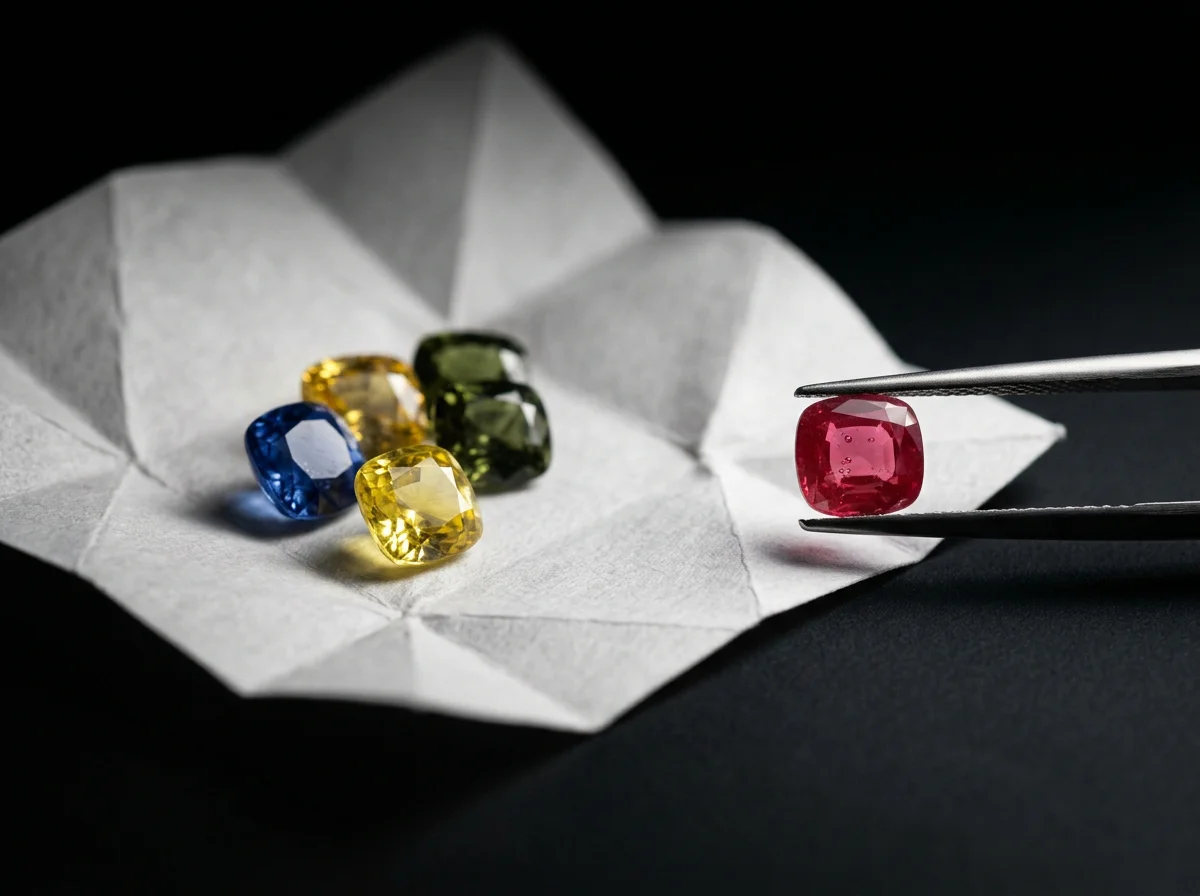
There is no single rate. A commercial Ceylon sapphire is modest per carat, while a fine, unheated stone of vivid colour can cost many times more for the same weight.
The honest answer is that quality decides everything. Ceylon sapphires span a vast range, from pale, included stones bought by the parcel to exceptional, vividly coloured gems that change hands for serious sums per carat. Because the price is quoted per carat and then multiplied by the weight, two finished stones of the same carat weight can sit at completely different prices. The weight tells you almost nothing on its own.
It helps to think in broad tiers rather than fixed numbers. Commercial stones, often with a grey or weak blue and visible inclusions, sit at the bottom. Fine stones, with good clean colour, sit well above them. Exceptional stones, with vivid colour, eye-clean clarity and no heat, sit higher again, and rare pieces can be worth a large multiple of an ordinary stone of the same size. Where a given stone lands depends on the four Cs, its origin and its treatment.
Why Price per Carat Rises With Size
These bars show the shape of the curve, how price per carat steps up with weight, not actual prices. A fine 3 carat stone costs far more per carat than a fine 1 carat one of the same quality.
What Moves the Price of a Sapphire?
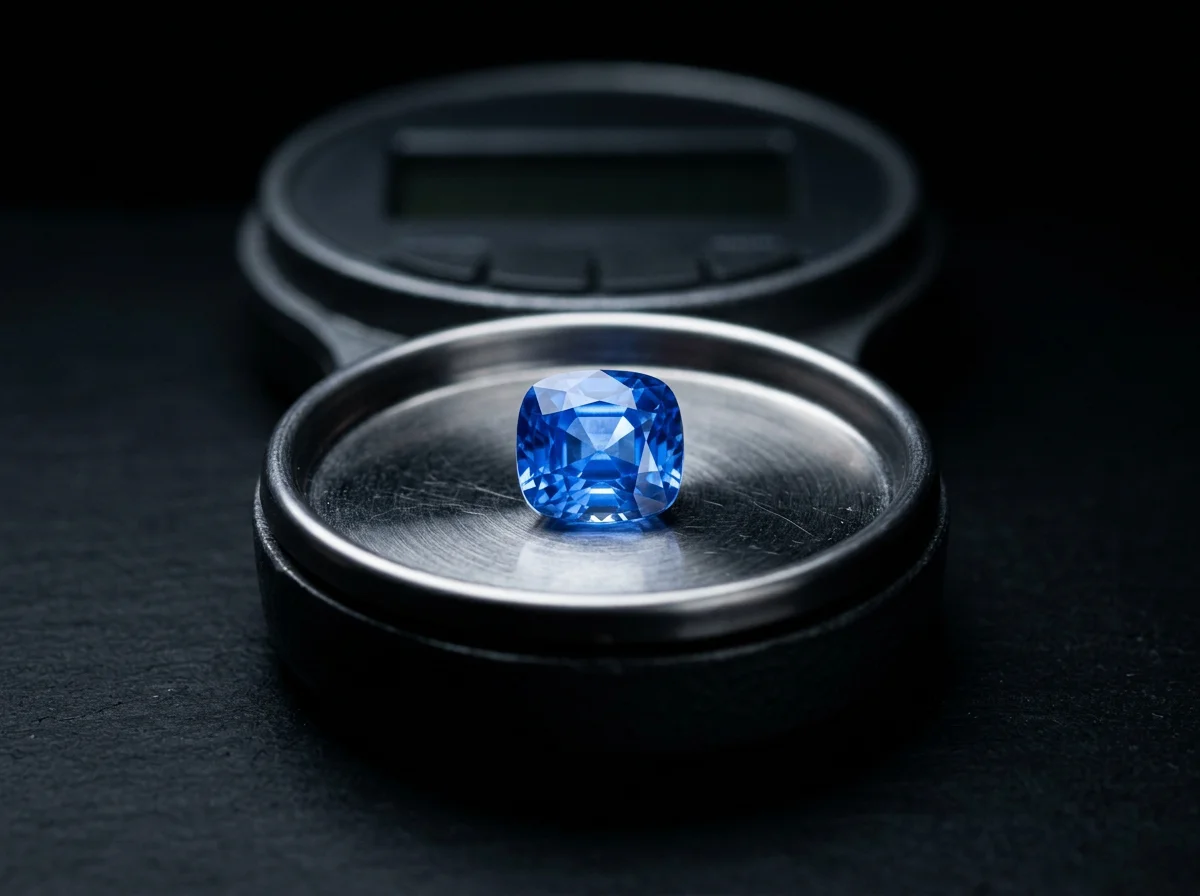
Colour moves the price most, then clarity, cut and carat, with origin and treatment on top.
Colour is the largest single factor. A pure, vivid blue with even saturation and a medium to medium dark tone commands the most; a grey or green secondary tint, or colour that is too light or too inky, pulls the figure down hard. Clarity comes next: an eye-clean stone is worth markedly more than one with visible inclusions or a milky haze. Cut then decides how much of that colour and clarity you actually see, so a lively, well proportioned stone is worth more than a poorly cut one of the same rough.
On top of the four Cs sit origin and treatment. A documented fine origin, such as Ceylon, carries its own premium, because the name signals a known character and quality. Treatment is the other lever: an unheated stone of good colour is rarer than a heated one and priced accordingly. These factors compound, which is why the range is so wide. A stone that scores well on all of them is rare, and rarity is what you pay for.
What Lifts and Lowers the Price per Carat
| Factor | Lifts the price | Lowers the price |
|---|---|---|
| Colour | Vivid, pure blue with even saturation | Grey or green tint, too light or too dark |
| Clarity | Eye-clean and bright | Visible inclusions or a milky haze |
| Cut | Lively, even, well proportioned | Windowing, off-shape, poor symmetry |
| Carat | Larger sizes, which are scarcer | Small, common sizes |
| Origin | A documented fine origin such as Ceylon | Unstated or less-prized origin |
| Treatment | Unheated, confirmed by a report | Heated; still fine, simply more affordable |
Heated or Unheated, What Is the Premium?
An unheated sapphire of fine colour commands a premium over an identical heated stone, and for the rarest pieces it can be a multiple of the price.
Most sapphires on the market have been heated to improve their colour or clarity, which is a long accepted and disclosed treatment. An unheated stone has had no such treatment, so it is rarer, and a fine unheated Ceylon sapphire sits in a small, sought-after group. That scarcity is what you pay for, and the premium grows with the colour quality: it is largest on stones that are beautiful on their own merits.
The premium is only worth paying when the natural colour is genuinely fine. An unheated stone of weak colour is still a weak stone, and a skilfully heated sapphire of vivid colour can be the better buy. Our guide to heated and unheated sapphire explains what the treatment does and how it is confirmed.
Why Does Price per Carat Jump at Certain Weights?
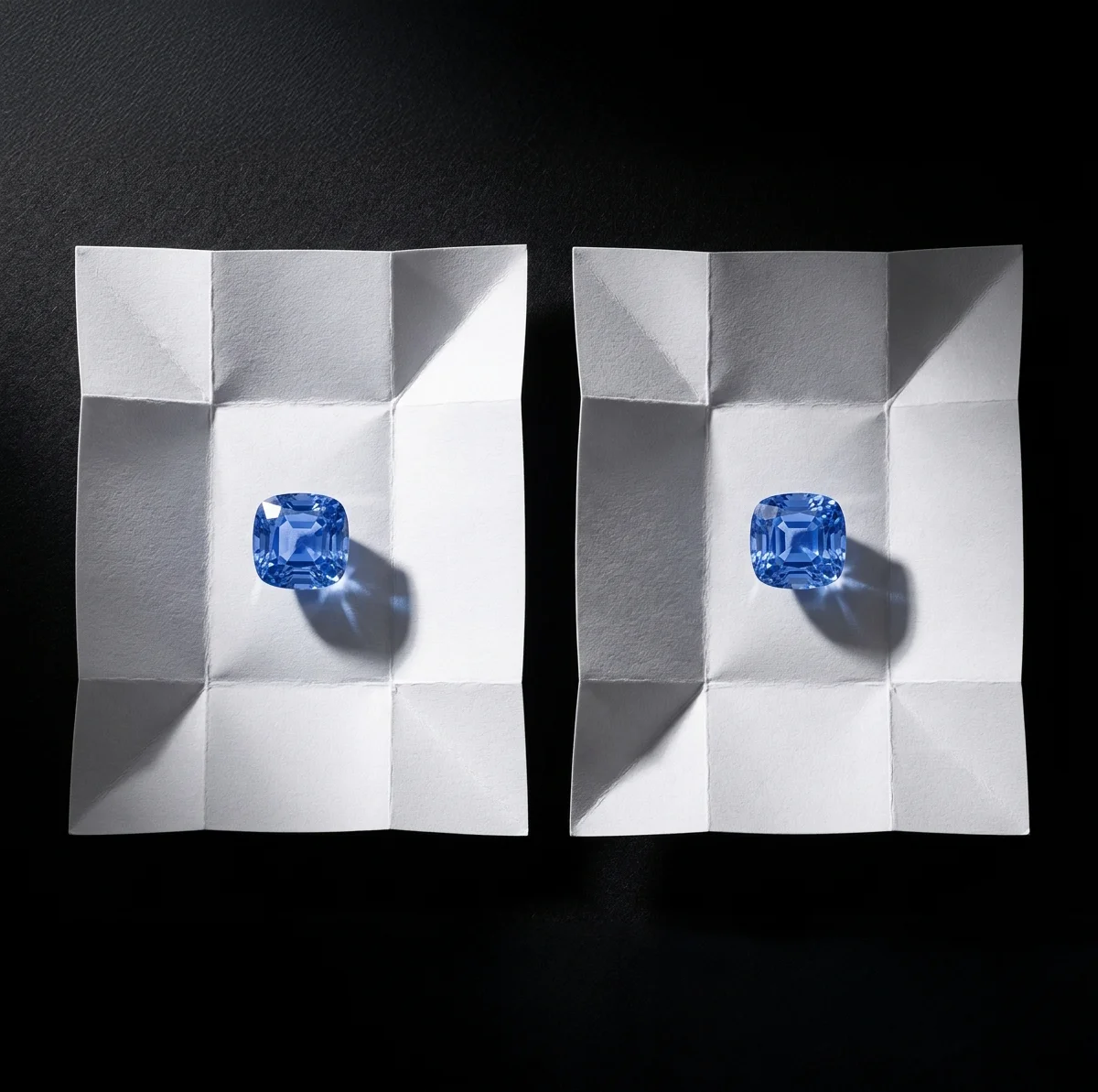
Because fine sapphires grow scarce as they get larger, the price per carat steps up at key weights rather than rising evenly.
Large rough that yields a clean, well coloured stone is far rarer than small rough, so the supply thins as the size goes up. The market reflects this with thresholds. A fine 2 carat stone usually costs more than twice a fine 1 carat stone of the same quality, and the gap widens again past 3 and 5 carats. The per carat figure itself rises, not just the total, which is the part that surprises first-time buyers.
This is why weight alone is a poor guide to value, and why a jeweller quotes the whole stone, not a rate card. A small stone of exceptional colour can be worth more per carat than a larger stone of weak colour. Decide the quality you want first, then see what size that quality is available in for your budget, rather than fixing on a carat weight and hoping the quality follows.
How Do I Know a Price Is Fair?
A fair price is one you can verify: the stone has an independent report, and it sits in line with similar certified stones.
Compare like with like. A price only means something next to other stones of the same colour, clarity, cut, weight, origin and treatment, all backed by reports you can check. Without a report, you are trusting a description, and descriptions are where margin hides. Read the certificate first and the price second, so you know exactly what you are paying for.
Be wary of a price that looks too good. A fine unheated Ceylon sapphire offered far below the market is usually heated, treated in some other way, a different origin, or not what the label claims. An honest seller will show you the report, explain the price and let you compare. If a quote cannot be explained against the stone's qualities, that is the answer.
Why We Do Not Publish a Price List
Every stone is individual, so a fixed per carat rate would be misleading. We quote each sapphire on its own merits, against its independent report, and we explain how we reached the figure.
- Priced by
- Per carat, then times the weight
- Biggest driver
- Colour
- Order of impact
- Colour, clarity, cut, carat
- Adds a premium
- Unheated, and a documented fine origin
- Price steps up
- Past 2, 3 and 5 carats
- Fair-price test
- Verified against an independent report
Common Questions
There is no single price. A commercial 1 carat stone is modest, while a fine, unheated 1 carat stone of vivid colour can cost many times more. The carat weight sets the scale, but colour, clarity, cut, origin and treatment set the price. Judge the stone, not the weight.
Because the qualities that make a sapphire fine are rare, and they compound. A stone that is vividly coloured, eye-clean, well cut, of good size and unheated is a scarce combination, and scarcity is what you pay for. Each factor adds to the per carat figure.
For the same quality, yes: fine large stones are scarcer, so the price per carat steps up at certain weights. But a large stone of weak colour can be worth less per carat than a small stone of exceptional colour. Size lifts the price only when the quality is there too.
Yes. An unheated stone of good colour carries a premium over an identical heated one, because it is rarer, and the premium is largest on the finest colours. It is worth paying only when the natural colour is genuinely fine, not as a label on a weak stone.
Insist on an independent report, then compare the stone against similar certified stones of the same colour, clarity, cut, weight, origin and treatment. A price that cannot be explained against the stone's qualities, or that looks far too low, is a warning sign.
Learn More
Tell Us Your Budget, We Will Find the Stone
Give us the colour, size and budget you have in mind, and we will send certified stones that match, each quoted on its own merits.