
Ceylon vs Montana Sapphire
Ceylon and Montana are two very different sapphire sources. Ceylon is the classic, prized for a bright, pure blue across a wide range of fine stones. Montana is an American source known for teal and parti colours and for traceable, locally mined material. The right one depends on the colour you want and what you value.
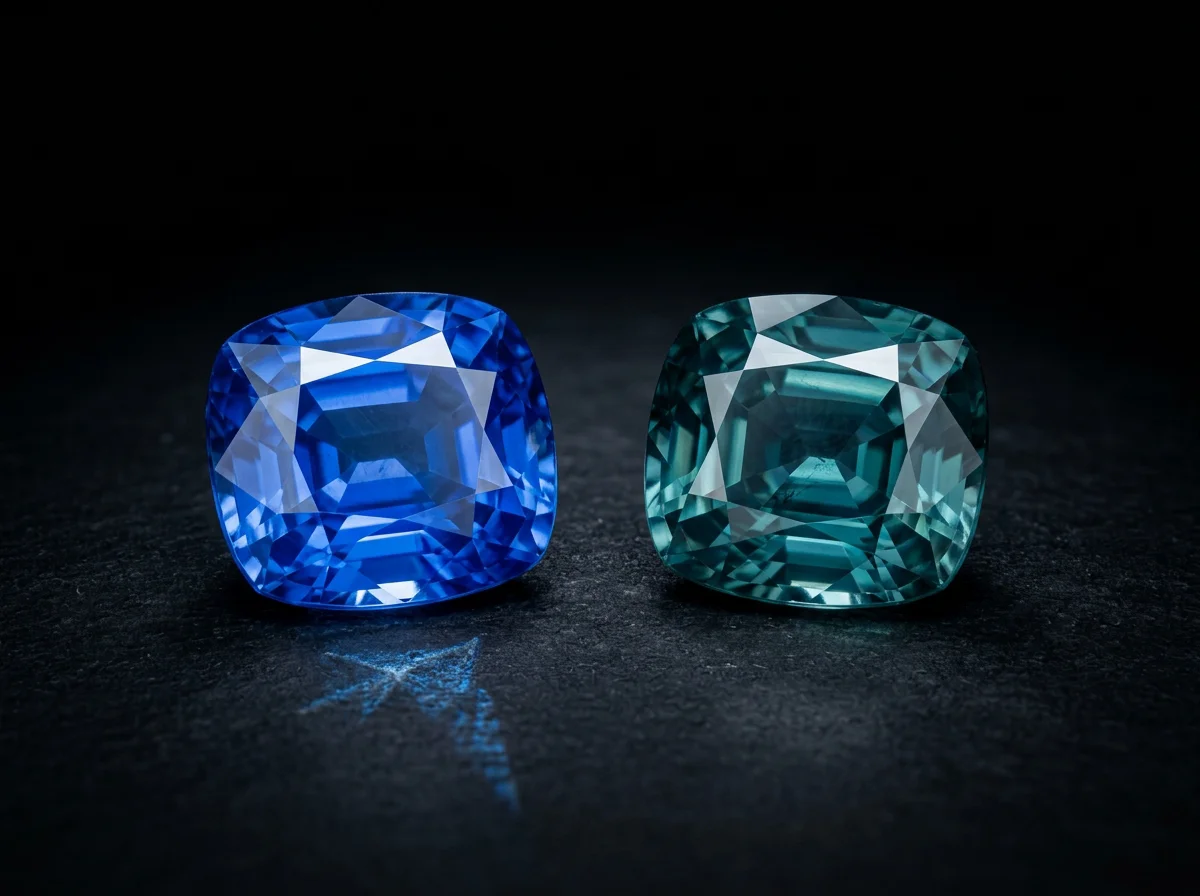
How Does Ceylon Sapphire Compare to Montana?
Ceylon gives you a brighter, purer blue and a far wider choice of fine and larger stones; Montana gives you distinctive teal and parti colours and traceable American provenance.
These are not rivals for the same stone so much as answers to different questions. If you picture a sapphire as a clear, saturated blue, Ceylon is the natural home for it, with fine examples in every size. If you are drawn to the cooler teal and green-blue tones that have become popular for modern rings, Montana is where those colours are most at home.
Size is the other dividing line. Ceylon routinely produces fine stones of two, three carats and well beyond, while fine Montana stones tend to be smaller and larger ones are genuinely scarce. So a buyer who wants a larger fine blue is usually looking at Ceylon whether they started there or not. Judge either stone on the four Cs once you have settled on the colour family you want.
Ceylon vs Montana, Compared
- A bright, pure classic blue
- Prized cornflower to vivid saturation
- Fine stones in every size, and larger
- A centuries-old Ratnapura trade
- Strong value across the range
- Mined in the American state of Montana
- Teal, green-blue and parti colours
- A steely Yogo Gulch blue
- Traceable, locally mined provenance
- Popular for teal engagement rings
Ceylon and Montana Sapphire Compared
| Feature | Ceylon | Montana |
|---|---|---|
| Signature colour | Bright, pure blue, cornflower to vivid | Teal, green-blue and parti colours; some blue |
| Typical size | Fine stones across all sizes | Often smaller; large fine stones are scarce |
| Availability | The widest choice of fine material | Limited, with strong demand |
| Provenance story | Ratnapura, a centuries-old trade | Traceable, locally mined in the USA |
| Price position | Strong value across the range | A premium for size and fine colour |
| Best for | A classic blue, larger stones | Teal and parti tones, traceable sourcing |
Lead With the Colour, Not the Country
Ceylon and Montana excel at different colours, so decide the colour you want first. We can source a fine classic blue readily, and we will tell you honestly when a particular teal is better found in Montana material.
What Is a Montana Sapphire?
A Montana sapphire is a natural sapphire mined in the American state of Montana, known for teal and parti colours and for a strong, traceable provenance.
Montana has produced sapphire since the late nineteenth century, from alluvial deposits and from the famous Yogo Gulch, which yields a distinctive steely blue. Today the appeal is largely the cooler palette: teal, green-blue, and parti stones that show more than one colour in a single gem. For buyers who want something away from the classic blue, that individuality is the draw.
Provenance is the other selling point. Montana stones can often be traced to a known source within the United States, which appeals to buyers who want home-grown material and a clear chain of custody. The trade-off is size and choice: fine Montana stones are usually small, and larger fine examples are hard to find.
Teal and Parti Colours, Who Wins?
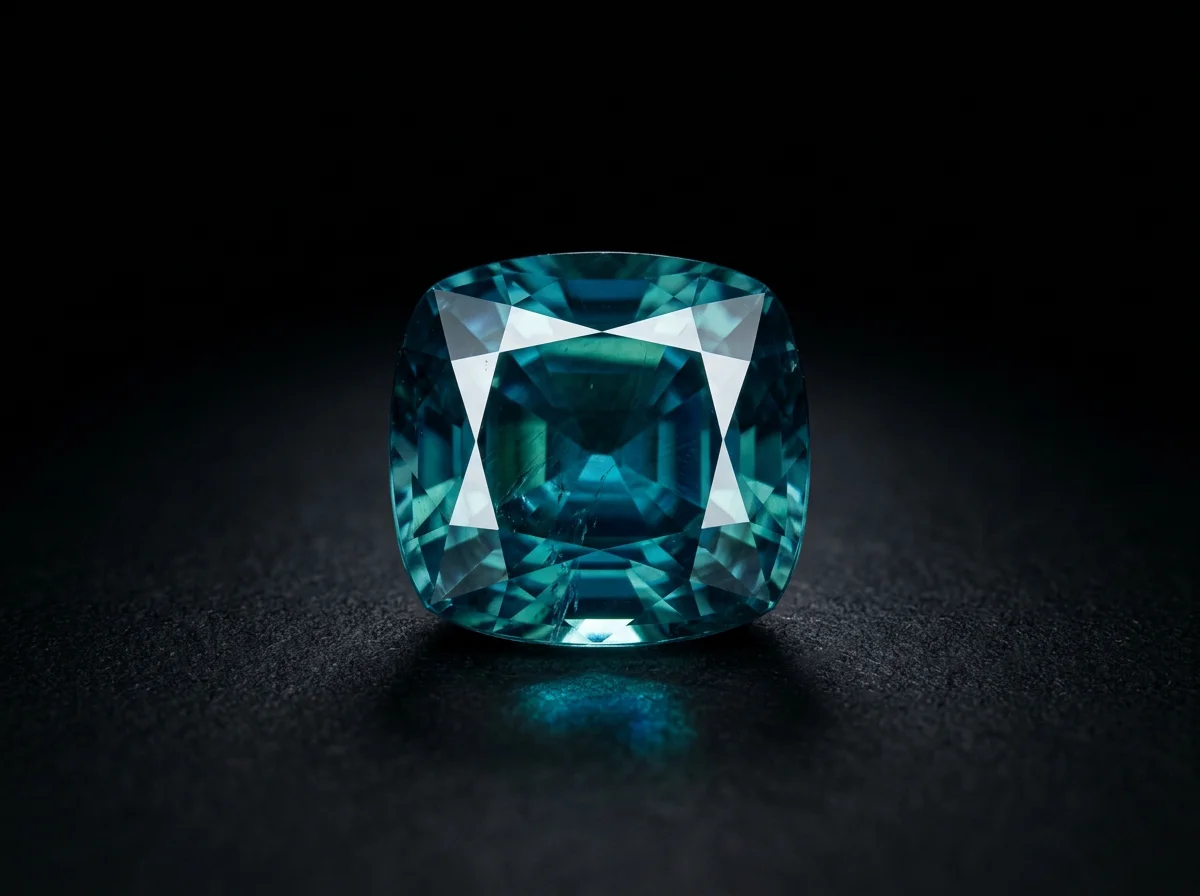
Montana wins on teal and parti colours. They are its signature, and they are harder to find in Ceylon material.
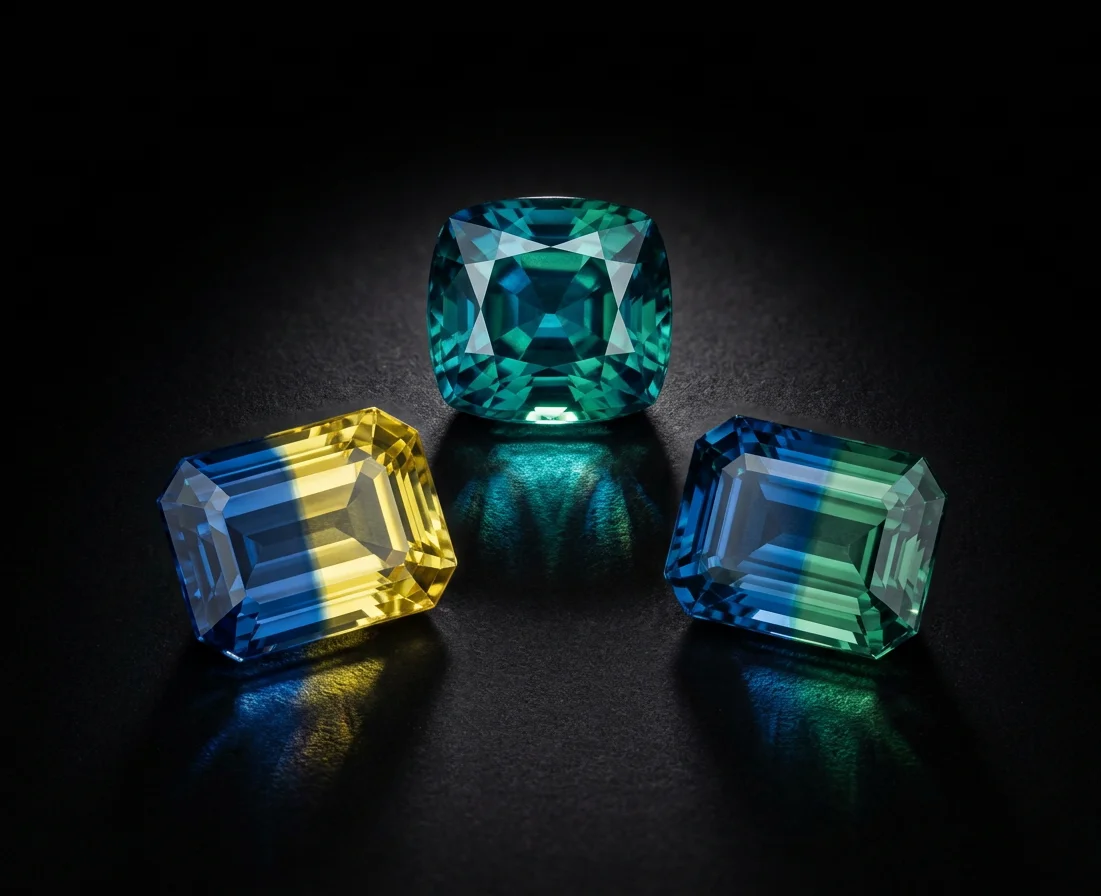
Teal sapphires sit between blue and green, and parti sapphires show distinct zones of colour, often blue and green or blue and yellow, in one stone. Montana produces these tones readily, which is why it has become the go-to source for the teal engagement rings that have grown popular in recent years. If that is the look you want, Montana is the more reliable place to find it.
Ceylon does produce green-blue and fancy-coloured sapphires, including yellows, pinks and the celebrated padparadscha, but a true even teal is less typical of the source. If your heart is set on a teal or parti stone, lead with that colour and let the origin follow. You can see the kinds of teal and fancy tones we hold.
Which Suits an Engagement Ring?
Both suit a ring well, because sapphire is hard and durable. Choose Ceylon for a classic blue or a larger stone, and Montana for a distinctive teal or a traceable home-grown gem.
Sapphire scores 9 on the Mohs scale, second only to diamond, so either origin will stand up to daily wear in an engagement ring. The decision is about look and meaning rather than toughness. A Ceylon blue is the timeless choice and gives you the most options for a larger or finer centre stone. A Montana teal makes a more individual ring, and its traceable American sourcing matters to some couples.
Set your priorities in order: the colour first, then the size you need for the setting, then the budget, then the provenance story. Whichever origin you choose, buy a stone with an independent report so you know exactly what is going into the ring.
- Species
- Corundum, natural sapphire
- Hardness
- 9 on the Mohs scale
- Ceylon signature
- Bright, pure blue, cornflower to vivid
- Montana signature
- Teal, green-blue and parti colours
- Larger fine stones
- Ceylon, across all sizes
- Traceable US provenance
- Montana, locally mined
Common Questions
It depends on the stone. A fine, larger Ceylon blue typically costs more than a small Montana stone, but a rare, well coloured Montana parti or teal can command a strong premium of its own. Value follows colour, clarity, cut and size more than the origin name.
Yes. Montana sapphires are natural corundum, the same mineral as Ceylon sapphire. They are simply mined in the United States and tend towards teal, green-blue and parti colours rather than the pure blue Ceylon is known for.
You can find green-blue and fancy-coloured sapphires from Ceylon, but a true even teal is less typical of the source. Montana is the more reliable origin for teal and parti tones. If teal is the goal, lead with the colour and let the origin follow.
Both wear extremely well, as sapphire is 9 on the Mohs scale. Choose Ceylon for a classic blue or a larger centre stone, and Montana for a distinctive teal or traceable American provenance. Decide on colour and size first, then the origin.
Montana deposits tend to yield smaller stones, so fine examples above a couple of carats are genuinely scarce. If you want a larger fine sapphire, Ceylon offers far more choice across sizes and qualities.
Learn More
Classic Blue or Something Different?
Tell us the colour and size you are after, and we will send certified Ceylon stones to match, or tell you honestly when another source suits you better.