Certification and Authenticity
Every stone we sell is certified by an independent gemmological laboratory, and the report travels with it. It identifies the stone, records its weight and treatment, and gives an opinion on origin. You can verify every report at source, and we would rather you did.
How Is Every Stone Certified?
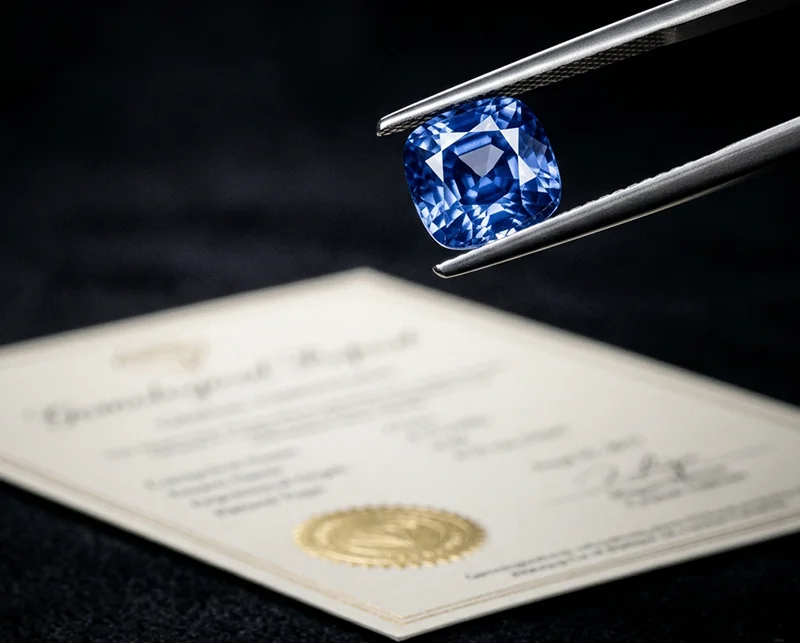
Before a stone joins the collection it is sent to an independent laboratory, which examines it and issues a written report. That report then travels with the stone.
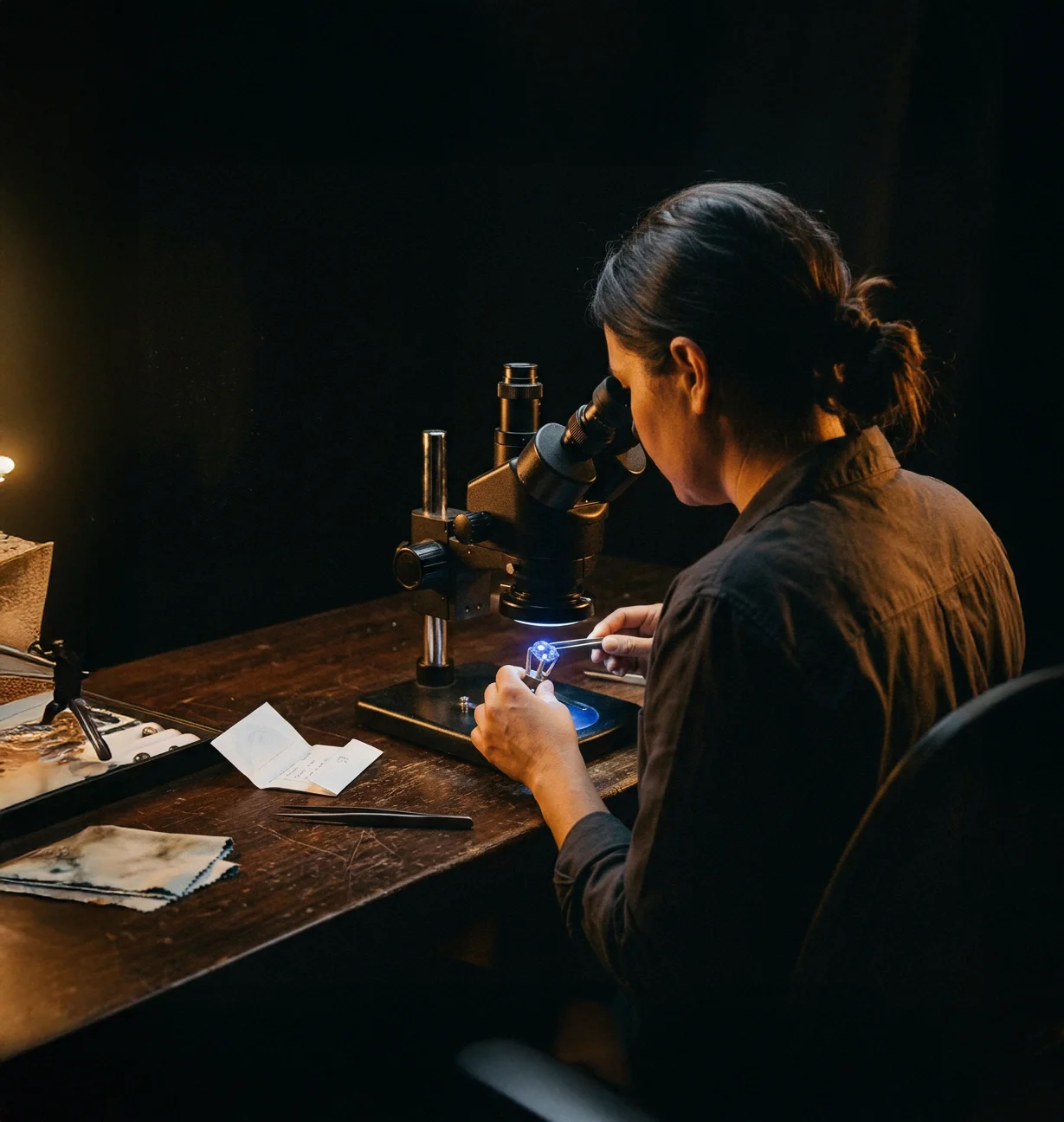
The laboratory works only from the stone itself. It measures the weight and dimensions, studies the inclusions under magnification, and runs the spectroscopy needed to identify the species and to read any treatment. None of this depends on our word, which is the point: the laboratory has no stake in the sale.
We choose the laboratory to suit the stone. A fine unheated sapphire earns a detailed origin and treatment report from a house such as SSEF or Gübelin; a clean commercial stone is well served by GIA. Whichever issues it, the report you receive is the same one we relied on when we bought the stone.
What a Laboratory Report Shows
Every stone leaves us with a report like this one. Read it in order, from the number you verify it by to the two lines that decide the most: treatment and origin.
the issuing laboratory
- 1 Identity Confirms the stone is a natural sapphire, not a synthetic, a simulant or another gem.
- 2 Weight The exact carat weight, which must match the stone in your hand.
- 3 Measurements The millimetre dimensions, a second check that the report belongs to your stone.
- 4 Colour A neutral description of the body colour, shape and cut.
- 5 Treatment States whether the stone has been heated. This is the line that supports an unheated premium.
- 6 Origin The laboratory's expert opinion of where the stone formed, such as Ceylon.
Which Laboratories Do We Use?
We use the laboratories the trade trusts most. Each is independent, recognised worldwide, and chosen to suit the stone.
What a Report Confirms, and What It Does Not
A gemmological report is a statement of fact about the stone, not a valuation. Knowing the difference is how you read one well.
- That the stone is a natural sapphire, not synthetic or a simulant
- Its exact weight and measurements
- Whether it has been heated, or shows no indications of heating
- An expert opinion on origin, such as Ceylon
- Set a price or place a value on the stone
- Rate the stone's beauty or desirability
- Guarantee origin as an absolute certainty
- Replace verifying the number at source yourself
How Do You Verify a Report?
It takes a minute, and we would always rather you did it. Three steps confirm the report is genuine and belongs to your stone.
Verify It, Rather Than Take Our Word
Ask us for the laboratory report on any stone in the collection and we will send it before you commit, so the verification is yours to make. We would always rather you bought on the strength of the laboratory's report than on ours.
Common Questions
Every stone of real value comes with a report from an independent laboratory, and that report travels with the stone. On a small accent stone where a full report would cost more than it adds, a stone may be sold without one; where that is the case we say so plainly and still state the treatment honestly.
The best report is one from a respected, independent laboratory that you can verify. GIA is the most widely recognised for identification, weight and treatment. For a fine coloured stone, SSEF and Gübelin are especially respected for origin and treatment, and GRS is common in the trade. The right choice depends on the stone.
Yes, and we encourage it. Enter the report number on the issuing laboratory's official website, then confirm that the weight, measurements and details match the stone you hold. We will send the report on any stone before you commit so the verification is yours to make.
No. A gemmological report describes the stone but does not price it. Value comes from the market and from quality. Any certificate that prints a value is a valuation or a sales tool, not an independent gemmological report.
It is the laboratory's expert opinion, based on the stone's inclusions and chemistry, that the sapphire most likely formed in Sri Lanka. Ceylon is a sought-after origin, so a respected laboratory's Ceylon call is what supports an origin premium. Read it as a well-founded opinion rather than an absolute certainty.
Learn More
See the Report Before You Buy
Ask for the laboratory report on any stone in the collection and we will send it, so you can verify it yourself before you decide.