
Ethical and Responsible Sourcing
Our stones are hand-mined in Sri Lanka, most of them around Ratnapura, using methods that have changed little in generations. Mechanised mining is restricted by law, worked pits are restored, and the teams who find the stones share in their worth. We follow each gem from the ground to your hand.
Where Do Our Stones Come From?
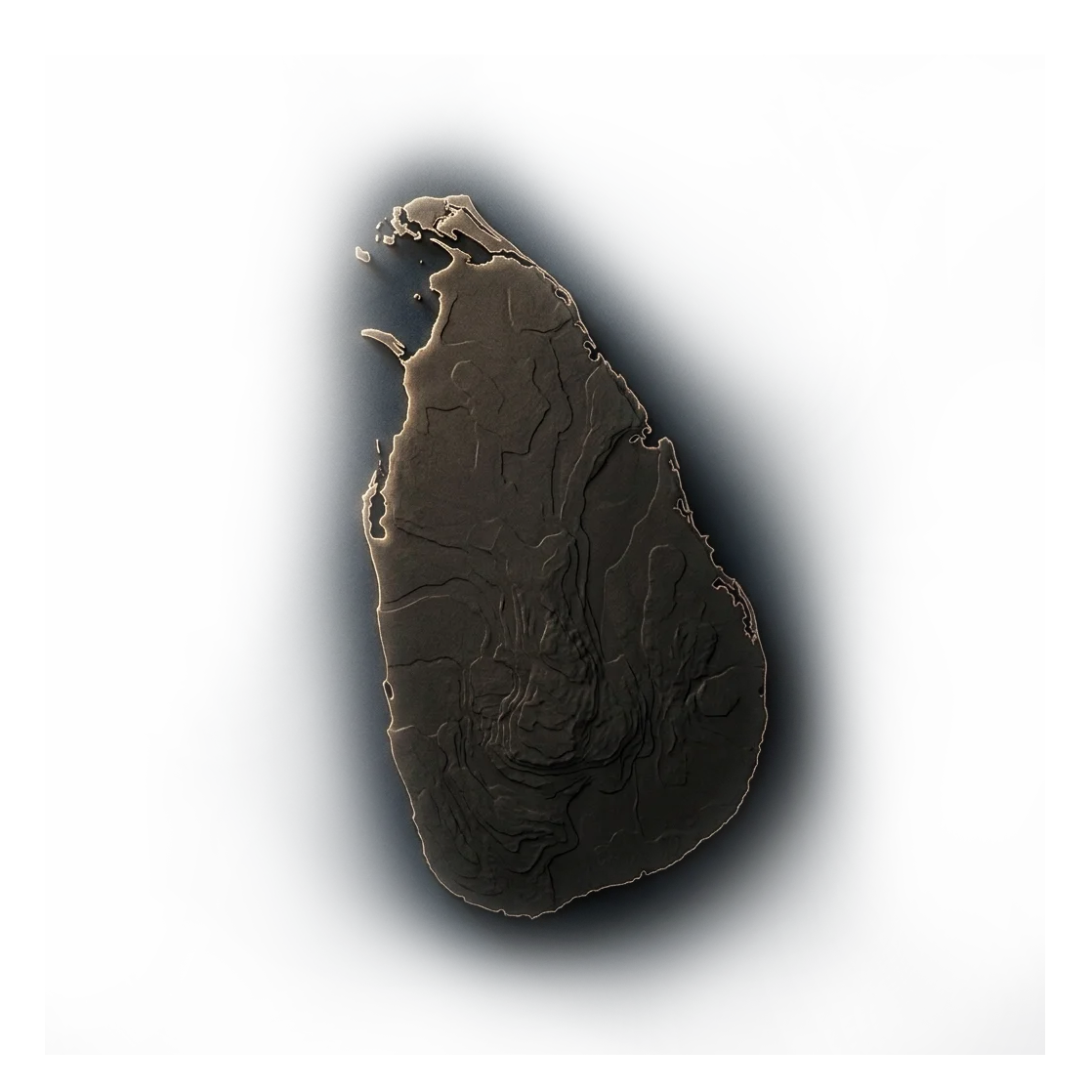
Most come from Ratnapura and the surrounding Sabaragamuwa Province in southern Sri Lanka, the ground that has produced Ceylon sapphires for centuries.
Ratnapura means the city of gems, and the name is earned. The river gravels and hill country around it hold sapphire, ruby, spinel, garnet and more, laid down over millions of years and worked by local families for as long as anyone can remember. When a report gives an origin of Ceylon, this is the land it points to.
Buying close to the source matters for more than romance. It lets us see how a stone was found, deal with the people who found it, and carry its story forward honestly rather than picking it up anonymously several hands down the chain.
From the Ground to Your Hand
We keep the thread from the riverbed to your hand, so the story you are told is the story that happened.
How Are Ceylon Gems Mined?
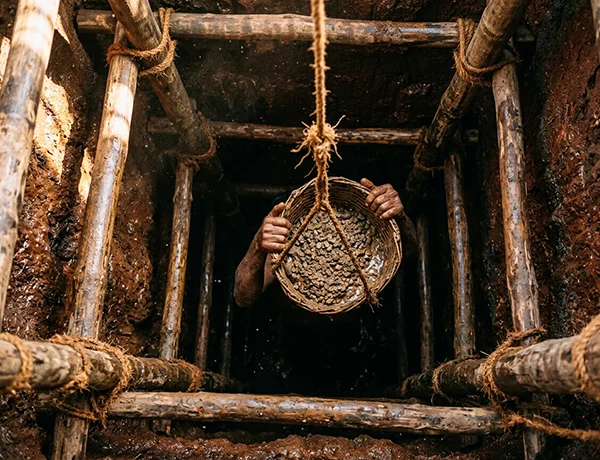
By hand, for the most part: gem-bearing gravel is dug from shallow pits and riverbeds, then washed and sorted by eye.
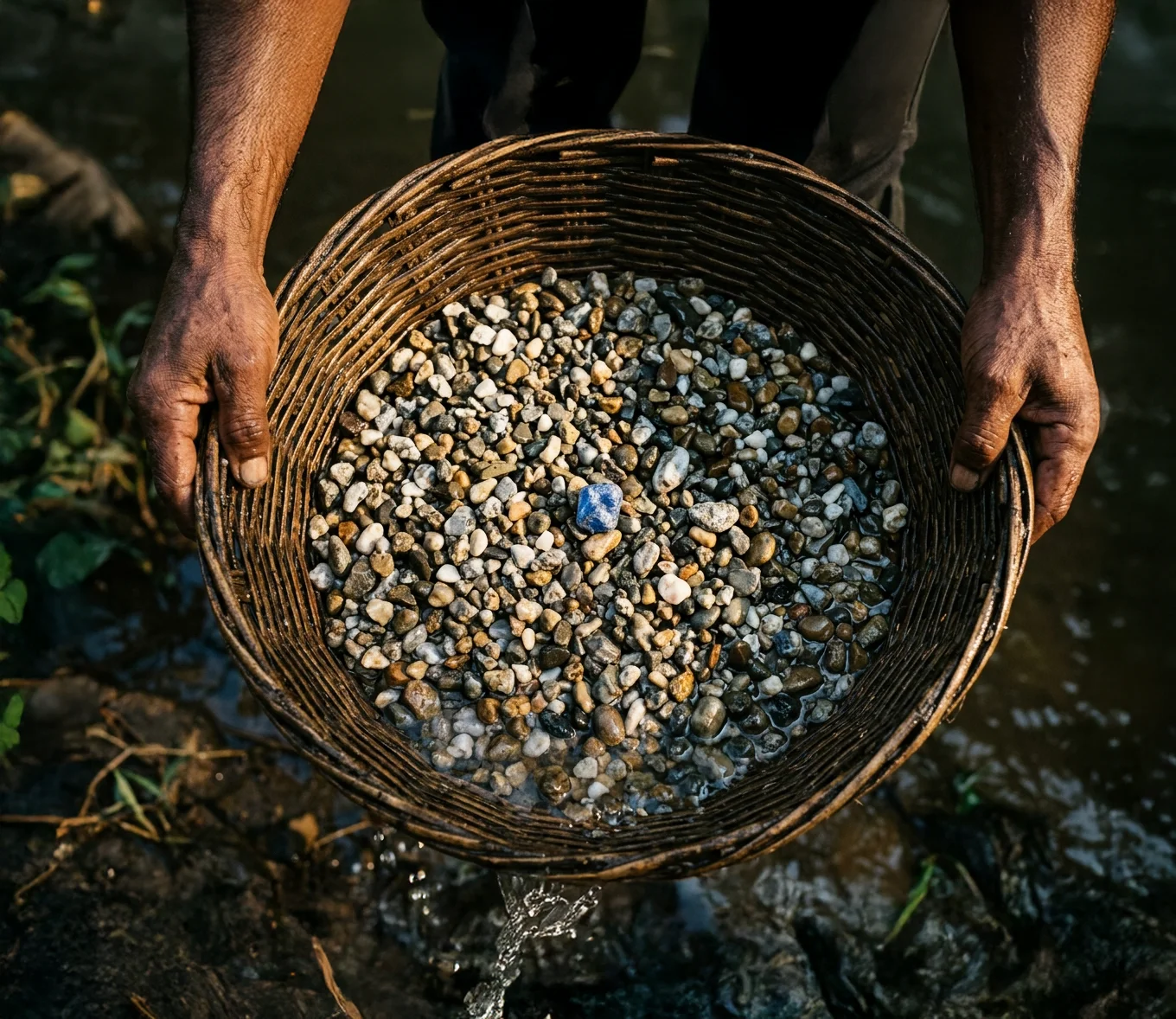
The traditional method works a layer of gem gravel called illam. A narrow pit is sunk by hand, the gravel is brought up, and it is washed in cane baskets so the heavier gem crystals settle out to be picked over in daylight. Along the rivers, the same gravel is worked directly from the water. It is slow, skilled work that disturbs little ground.
This is a world away from the open-cast, heavy-machinery mining seen in some other gem regions. In Sri Lanka the scale is small, the footprint is light, and the knowledge sits with the people doing the digging rather than with a distant operator.
Why Small-Scale Mining Matters
How Ceylon gems are mined is not how gems are mined everywhere. The method is the reason the land and the people are protected.
- Small pits worked by hand, light on the land
- Worked pits refilled and the ground restored, by law
- Skill and income stay in local communities
- The share system spreads the value fairly
- Heavy machinery and open-cast extraction
- Scarred land and lasting damage
- Value drawn away from the source
- Little trace of who found the stone
How Do We Keep Sourcing Fair?
We buy through the traditional share system, which splits the proceeds of a stone among the people who worked to find it, and we pay properly for what we take.
On a Sri Lankan mining team, the land owner, the licence holder, the financier and the diggers each hold an agreed share of whatever the pit yields. When a stone sells, that share system distributes the value rather than concentrating it. Dealing at the source lets us work within it and pay a fair price, rather than squeezing the first link in the chain.
We would rather buy fewer stones well than many stones cheaply. Paying properly for a fine stone is not only right, it is how you keep good material and honest sellers coming back to you.
Honesty Over a Perfect Story
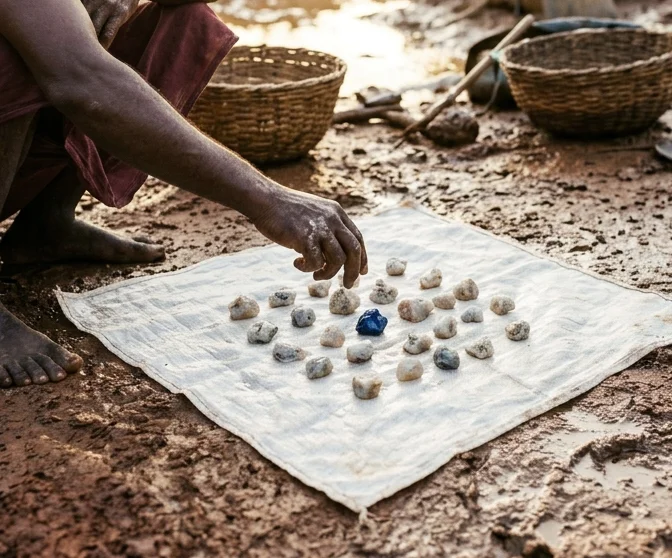
No gem house can prove a flawless chain of custody for every stone, and any that claims to should be treated with caution. We document what we can, confirm origin through an independent laboratory, and tell you plainly where the record ends.
Common Questions
Ceylon gems are mined mostly by hand, on a small scale, from shallow pits and river gravels. Sri Lankan law restricts heavy machinery and requires worked pits to be restored, so the environmental footprint is light. Buying close to the source lets us deal fairly with the people who find the stones.
It is the traditional way proceeds are divided on a mining team. The land owner, the licence holder, the financier and the diggers each hold an agreed share of what a pit yields, so when a stone sells the value is distributed among everyone who worked to find it rather than kept by one party.
Traditional hand mining disturbs little ground and the pits are small. Regulation requires them to be refilled and the land rehabilitated, and mechanised mining is restricted. The impact is far lighter than the open-cast, heavy-machinery mining seen in some other gem regions.
For most stones we can tell you the district and follow the piece from rough to cut, and an independent laboratory confirms origin on the report. We are honest about the limits: gem supply chains are informal, so where a full record does not exist we say so and let the laboratory's origin opinion stand.
We buy close to the source, at or near the mining areas, so we can see how a stone was found and pay fairly within the local share system. Dealing near the ground rather than several hands down the chain is how we keep sourcing both traceable and fair.
Learn More
Stones You Can Follow to Their Source
Every stone in the collection is hand-sourced in Sri Lanka and certified by an independent laboratory. Browse the collection, or ask us about a stone's journey.